Premises Liability Expert Witness
(318) 680-3773
Available for plaintiff and defense matters nationwide | Free case consultation
Property Owner Duty, Hazard Foreseeability, & Standard of Care in Premises Liability Cases
Nationwide premises liability expert witness specializing in slip, trip, and fall analysis, hazard recognition, and the reasonable foreseeability of dangerous conditions. Serving plaintiff and defense counsel in injury matters involving retail, commercial, and industrial properties.
Bryan Netherland, MBA, MS, CSP, CSHO, ARM | Premises Liability & Safety Expert Witness
- Certified Safety Professional (CSP)
- National Floor Safety Institute – Walkway Auditor Certificate Holder (WACH)
- 15+ years occupational safety leadership
- Global safety leadership experience
- Adjunct Professor – Occupational Safety & Health
- Nationwide Litigation Support
Slip and Fall Expert Witness
Slip, trip, and fall incidents are among the most common sources of premises liability litigation, and they are rarely as simple as they first appear. The central questions in these cases are technical: What condition caused the fall? Was that condition a recognizable hazard? How long did it exist? And would a reasonable inspection and maintenance program have identified and corrected it before the injury occurred?
Bryan Netherland provides slip and fall expert witness services in cases involving retail stores, commercial buildings, industrial facilities, parking areas, walkways, and stairways. He is a trained Walkway Auditor Certificate Holder (WACH) through the National Floor Safety Institute. His analysis examines the condition itself, the property owner’s inspection and maintenance practices, and whether those practices met the standard of care expected of a reasonably prudent owner or operator.
A slip and fall analysis typically evaluates:
- The specific condition that caused the incident, including liquids, debris, surface transitions, weather-related conditions, and walkway defects
- Whether the hazard was open and obvious, concealed, or recurring
- How long the condition existed and whether the owner knew or should have known of it
- The adequacy of inspection schedules, sweep logs, and documentation practices
- Walkway surfaces, slip resistance, lighting, handrails, and stairway geometry measured against recognized standards
- Warning practices, including the use and placement of signage and barriers
These evaluations draw on recognized consensus standards governing walkway safety and facility conditions, including ASTM F1637 (Standard Practice for Safe Walking Surfaces), ANSI/ASSP A1264.2 (Standard for the Provision of Slip Resistance on Walking and Working Surfaces), B101 (Standard for Walkway Auditing), applicable building codes, and NFPA 101 Life Safety Code provisions. When the question is whether a property owner met the standard of care, these standards define what reasonable practice looks like.
Property Owner Duty and Hazard Foreseeability in Premises Liability
Many workplace and public injury cases involve allegations that a property owner or operator failed to identify or correct hazardous conditions. In these matters, the central legal question often involves whether a hazard was reasonably foreseeable and whether reasonable steps were taken to prevent injury.
Bryan Netherland provides expert analysis in premises liability cases involving workplace environments, industrial facilities, commercial properties, and operational safety practices. His evaluations focus on hazard identification, safety program effectiveness, and whether the responsible party implemented reasonable measures to mitigate known risks.
Premises liability cases frequently involve issues related to safety inspections, hazard reporting procedures, employee training, and the adequacy of policies designed to prevent foreseeable incidents. Mr. Netherland reviews safety documentation, incident reports, maintenance records, and industry standards to determine whether hazards were properly identified and addressed.
Common premises liability matters include:
-
Slip, trip, and fall incidents
-
Workplace walkway and surface hazards
-
Inadequate hazard recognition or reporting systems
-
Safety inspection and maintenance failures
-
Unsafe operational practices within commercial facilities
-
Foreseeability of hazards and risk management practices
His opinions help courts and counsel understand how safety professionals evaluate foreseeable risks and what preventive measures are expected under accepted workplace safety standards.
What Does a Premises Liability Expert Witness Do?
When a premises injury case moves into litigation, attorneys need an expert who can evaluate the condition, the owner’s conduct, and the applicable standards, then communicate those findings clearly and defensibly in written reports, depositions, and at trial.
As a premises liability expert witness, Bryan Netherland provides:
- Case evaluation and liability analysis. Review of incident reports, photographs, video, inspection and sweep logs, maintenance records, prior incident history, policies, and training documentation to determine whether the owner exercised reasonable care
- Standard of care analysis. Application of ASTM, ANSI/ASSP, building code, and NFPA standards along with recognized industry practices to define what a reasonably prudent owner or operator would have done under the same circumstances
- Foreseeability opinions. Evaluation of whether the hazard was the kind of condition the owner should have anticipated and controlled, including analysis of notice, recurrence, and discovery time
- Written expert reports. Detailed, well-documented opinions setting out the factual basis, the applicable standards, and the reasoning behind each conclusion
- Deposition and trial testimony. Clear, well-supported testimony that explains technical safety concepts in terms judges and juries can follow
- Plaintiff and defense representation. Objective, evidence-based analysis grounded in the facts and applicable standards regardless of which side retains him
Why Attorneys Retain Seek Safety
Not all safety professionals are effective expert witnesses. The ability to form defensible opinions, prepare clear written reports, and withstand vigorous cross-examination requires a combination of operational depth, regulatory fluency, and communication skill. Bryan brings all three.
With more than 15 years of hands-on EHS leadership across manufacturing, logistics, and commercial operations, including Global level leadership roles, Bryan has operated at every level of workplace safety. He has implemented multi-site safety programs, conducted complex accident investigations, and navigated OSHA enforcement actions in real-world environments. His opinions reflect that operational context, not academic theory.
Bryan holds the Certified Safety Professional (CSP) designation from the Board of Certified Safety Professionals, widely recognized as the gold standard credential in occupational safety, along with the Certified Safety and Health Official (CSHO) and Associate in Risk Management (ARM) designations. Bryan also has an extended academic background including a Masters in Occupational Safety & Health as well as an MBA in Sustainable Business. These credentials establish his authority and credibility before counsel, opposing experts, and the court.
His analysis incorporates OSHA regulations alongside the full range of consensus standards that define reasonable industry practice, including ANSI, ASTM, ISO 45001, and NFPA codes. When the question is not whether a regulation was technically violated but whether an employer’s practices fell short of what the industry recognized as necessary, that broader analytical framework is what makes expert opinions both accurate and defensible.
Bryan is available for retention by plaintiff and defense counsel nationwide.
How to Retain a Premises Liability Expert Witness
Engaging Bryan for your matter is a straightforward process:
- Initial consultation — contact Bryan to discuss the case facts, the relevant safety issues, and whether the matter falls within his areas of expertise. Initial consultations are handled promptly, typically within one business day
- Document review — Bryan reviews all available case materials including incident reports, applicable regulatory and industry standards, medical documentation, witness statements, photographs, and any prior safety audits or program documentation
- Expert report — Bryan prepares a written report setting forth his opinions, the factual and regulatory basis for those opinions, and the standards that apply to the specific matter
- Deposition and trial support — Bryan is available for deposition preparation, deposition testimony, and trial testimony as the case requires
Early engagement is strongly recommended. Involving a qualified premises liability expert witness during case development, before depositions are taken, allows counsel to identify key technical issues early, frame discovery more effectively, and avoid gaps in the evidentiary record that are difficult to close later.
To discuss a potential matter, contact Seek Safety Consulting directly or review the Expert Witness FAQ for answers to common questions.
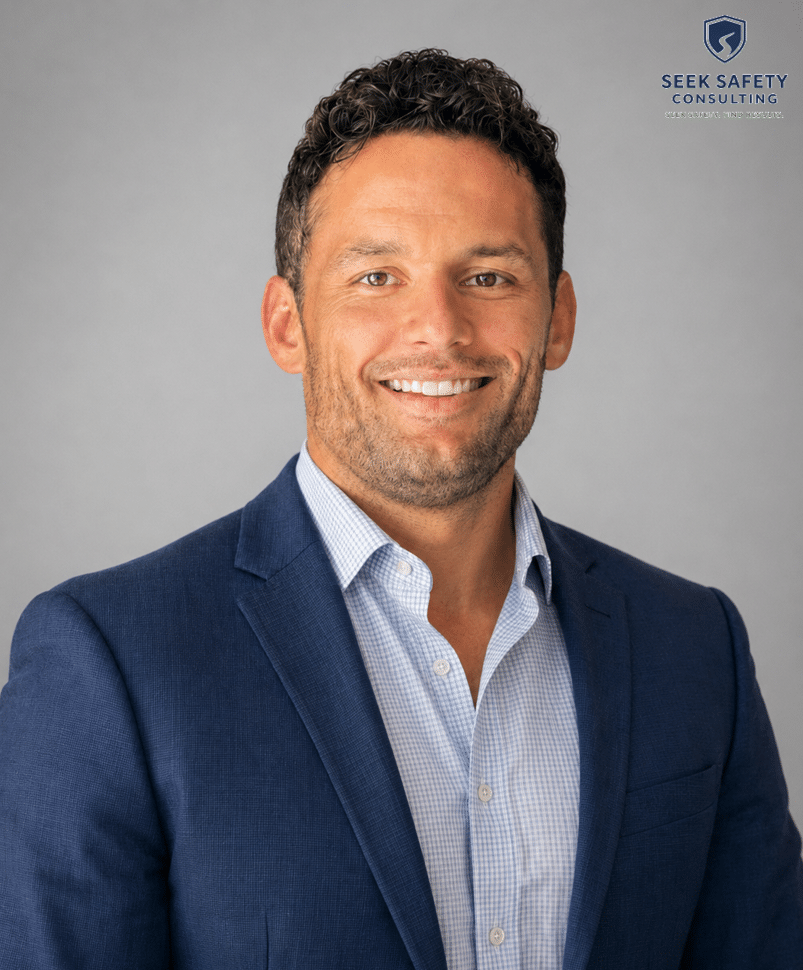
I’m Bryan Netherland, an environmental health and safety professional with more than 15 years of operational and regulatory experience. I support attorneys with authoritative expert insight in workplace injury and personal injury litigation involving industrial and commercial environments. My opinions are grounded in real-world experience managing global EHS programs and conducting complex investigations, ensuring clarity and defensibility throughout litigation. I personally review all case inquiries and will respond within one business day.
Expert Witness Insights
How Safety Professionals Evaluate Risk Foreseeability in Premises Liability Cases
How a Retail Safety Expert Witness Utilizes OSHA and Consensus Standards
Retaining a Safety Expert Witness: Considerations for Plaintiff and Defense Counsel
Accident Investigation Expert Witness: Analyzing Causation in Workplace Injury Litigation
Bryan Netherland publishes expert insights on OSHA compliance, workplace safety litigation, hazard recognition, and risk foreseeability analysis in injury and premises liability cases.