
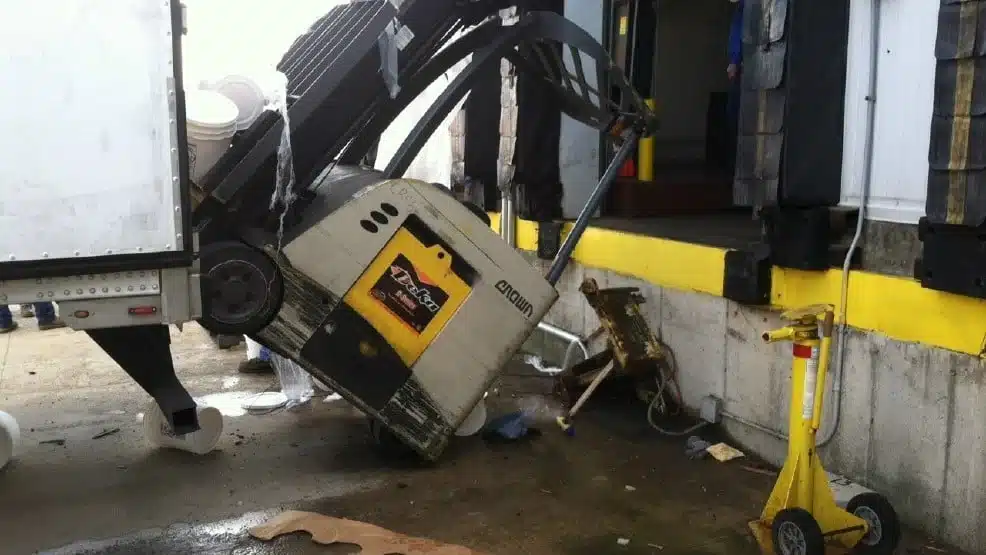
Forklift accidents are among the most common sources of serious workplace injuries in warehouses, manufacturing facilities, and distribution centers. When these incidents result in litigation, a qualified forklift expert witness is often central to evaluating what went wrong and whether reasonable safety practices were in place.
While regulatory standards such as OSHA’s powered industrial truck requirements provide an important framework, expert analysis typically goes beyond simple regulatory compliance. Safety professionals evaluate hazard recognition, operator training, facility conditions, and operational practices to determine whether foreseeable risks were properly managed.
Understanding how a forklift expert witness analyzes forklift incidents can help attorneys identify critical issues in workplace injury cases and clarify whether employers implemented appropriate safeguards.
Regulatory Framework for Forklift Operations
Forklift operations are primarily governed by OSHA’s powered industrial truck standard, along with industry guidance and manufacturer recommendations. These standards address key safety considerations including operator training, equipment inspection, maintenance, and safe operating practices.
However, regulatory standards often establish only minimum requirements. In many injury cases, the central question is not simply whether a regulation was technically followed, but whether the employer implemented reasonable safety measures consistent with recognized industry practices.
Safety experts therefore evaluate regulatory compliance alongside broader operational considerations, including how forklifts are used within the facility and whether foreseeable hazards were properly addressed.
Hazard Recognition in Forklift Operations
A critical aspect of expert analysis involves determining whether foreseeable hazards were recognized and appropriately managed.
Forklift operations present several well-known risks, including:
- pedestrian interaction in shared work areas
- obstructed visibility during load handling
- unstable or improperly secured loads
- excessive speed in warehouse environments
- inadequate separation between equipment and pedestrian traffic
When investigating a forklift incident, safety experts evaluate whether these hazards were reasonably foreseeable and whether adequate controls were implemented to reduce risk.
What a Forklift Expert Witness Reviews in Operator Training
Forklift operator training is another central element in many workplace injury investigations. OSHA requires employers to ensure that operators are properly trained and evaluated prior to operating powered industrial trucks.
In litigation, safety experts frequently review training records, evaluation procedures, and operational policies to determine whether training programs were adequate and consistently implemented.
Important considerations may include:
- whether operators received site-specific training
- whether evaluations were conducted by qualified personnel
- whether refresher training occurred after incidents or observed unsafe behavior
- whether supervisors actively monitored forklift operations
Deficiencies in training or supervision can significantly increase the likelihood of foreseeable incidents and are frequently central to expert opinions on employer duty and reasonable care.
How Forklift Accident Investigations Are Conducted in Litigation
When a forklift incident results in serious injury or death, a structured accident investigation is the foundation of forklift accident expert witness analysis. A forklift accident investigation typically begins with a comprehensive review of all available documentation, including the employer’s internal incident report, OSHA 300 logs, any citations issued following the incident, maintenance and inspection records for the equipment involved, and the operator’s training file.
Where physical evidence is available, a site inspection allows the expert to evaluate facility layout, traffic flow patterns, pedestrian pathways, visibility conditions, and the adequacy of physical controls such as barriers, signage, and designated travel lanes. In cases involving equipment malfunction, mechanical inspection of the forklift itself may also be warranted.
A thorough forklift accident investigation evaluates not just what happened at the moment of impact, but the conditions and decisions that allowed the incident to occur. This includes examining whether the hazard was reasonably foreseeable, whether appropriate safeguards were in place, and whether the employer’s safety management system was functioning as intended.
Facility Design and Traffic Management
Beyond operator training, the physical environment in which forklifts operate is a critical factor in many forklift accident investigations. Facilities with poor traffic management, inadequate separation between pedestrian and forklift travel paths, blind corners, insufficient lighting, or congested work areas, present foreseeable risks that employers have an obligation to address.
A forklift expert witness evaluates whether the facility’s layout reflected recognized practices for pedestrian-forklift separation, whether traffic control measures were adequate for the volume and type of operations being conducted, and whether conditions that contributed to the incident had been previously identified but left uncorrected. Prior near-misses, safety observation reports, and inspection records often reveal whether the employer was aware of hazardous conditions before the incident occurred.
Electric Pallet Jack and Powered Industrial Truck Incidents
Not all powered industrial truck incidents involve traditional sit-down counterbalanced forklifts. Electric pallet jacks, reach trucks, order pickers, and other powered industrial vehicles are governed by the same OSHA powered industrial truck standard and present similar hazards in warehouse and distribution environments. Expert analysis of these incidents follows the same framework applied to the specific context of the vehicle type and operational variables: evaluating operator training, equipment maintenance, traffic management, prior history, and hazard recognition.
About the Author
Bryan Netherland, MBA, MS, CSP, CSHO, ARM, is a workplace safety professional and forklift expert witness with more than 15 years of experience in environmental health and safety leadership. His work focuses on workplace safety litigation, hazard recognition, incident investigation, and regulatory compliance.
Bryan provides expert witness services in cases involving workplace injuries, operational safety practices, and employer duty of care. His opinions are grounded in real-world experience managing complex safety programs across multiple industries.